U.S. government moves over $100 million in BTC and BNB. A sale hasn't been confirmed
The U.S. government moved $100 million in Bitcoin and BNB from seized assets to custodial accounts, but it has not sold them or used taxpayer money to buy new crypto.
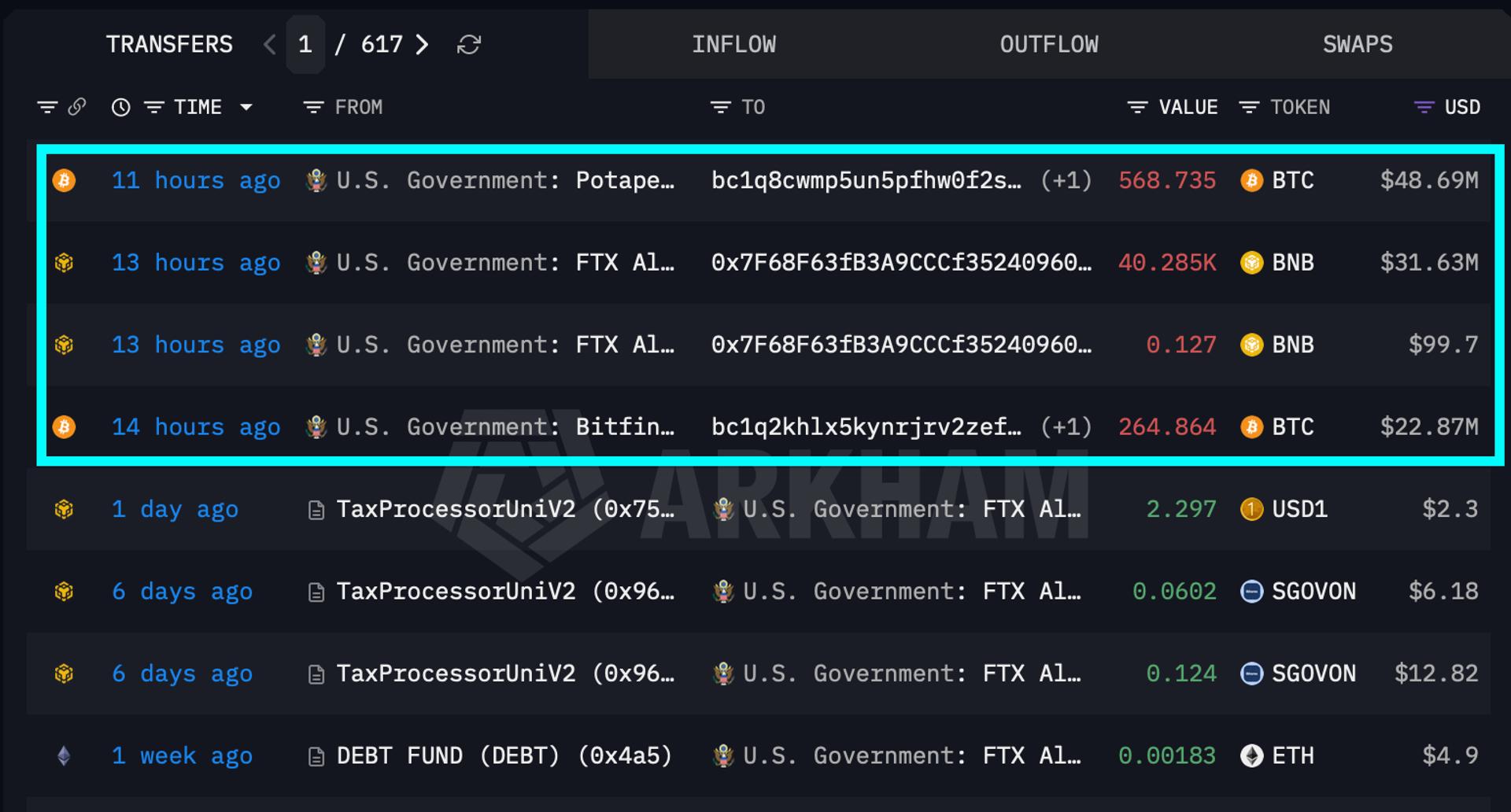
U.S. Government Moves Over $100 Million in Bitcoin and BNB – No Sale Yet
The Treasury Department’s recent transfer of more than $100 million in cryptocurrency has sparked speculation about a potential sale. In reality, the move was simply a re‑allocation of seized assets, and no new purchases have been made with taxpayer money.
How the Transfer Unfolded
Arkham, a blockchain‑intelligence firm, tracked the flow of funds on Tuesday. Two key transactions emerged:
- Bitcoin – 833.599 BTC, valued at roughly $71.6 million at the time, were sent from a government‑labeled wallet to two addresses that Arkham does not identify. Within hours, those coins were forwarded to addresses marked as Coinbase Prime deposit accounts.
- BNB – 40,285 BNB, worth about $31.6 million, moved from a government‑labeled wallet to an unlabeled address, then to a second unlabeled address. These tokens originated from assets seized from Alameda Research.
The Bitcoin came from two sources: a 568.7 BTC forfeiture linked to the Potapenko‑Turogin case and 264.9 BTC seized in the Bitfinex hack investigation. The BNB was part of the broader Alameda seizure.
Why This Isn’t a Sale
A transfer of assets is not the same as a sale. Under a March 2025 executive order, Bitcoin that is forfeited to the U.S. government is to be held in a Strategic Bitcoin Reserve. The Treasury’s intent is to preserve the value of seized holdings for future use, not to liquidate them immediately.
Market commentator Jose Rosell clarified on X that the movement of funds is routine and does not signal an impending sale. The Treasury has not used taxpayer money to acquire new crypto, and the seized holdings—currently valued at about $27.5 billion—remain under government control.
What This Means for the Market
While the transfer has no immediate impact on supply, it does highlight the growing intersection between law‑enforcement and the crypto ecosystem. The fact that seized assets are being moved to custodial accounts like Coinbase Prime suggests a trend toward institutional handling of government‑held crypto.
Investors should note that the Treasury’s strategy is to hold these assets rather than sell them, which could provide a stabilizing effect if the market were to experience a sudden influx of supply.
Bottom Line
The U.S. government’s recent movement of over $100 million in Bitcoin and BNB reflects routine re‑allocation of seized assets, not a sale. The Treasury’s Strategic Bitcoin Reserve policy keeps these holdings intact, and no new purchases have been made with public funds.
---
TL;DR: The U.S. government moved $100 million in Bitcoin and BNB from seized assets to custodial accounts, but it has not sold them or used taxpayer money to buy new crypto.
Source
Read original sourceWhy we picked this
Official U.S. government wallet activity reported with verified data, relevant to institutional market structure.