Over 11 million bitcoin has no known owner. Here's what it means
Over half of all Bitcoin exists in wallets that cannot be linked to any known entity, highlighting the enduring prevalence of self‑custody and the uncertainty around lost or hidden coins.
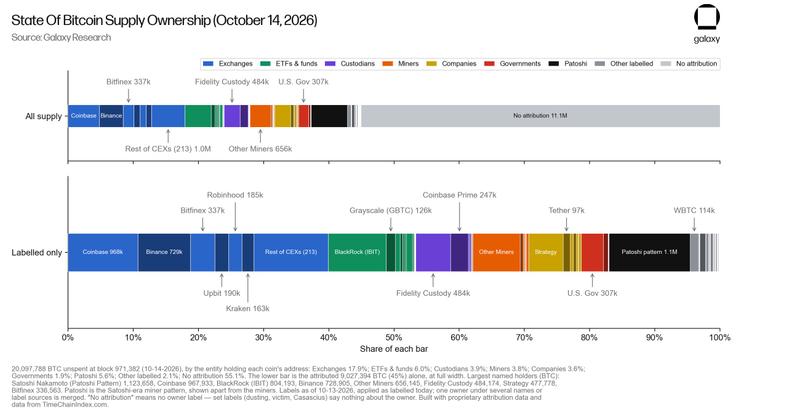
Over 11 Million Bitcoin Have No Known Owner – What It Means
A recent snapshot from Galaxy Research shows that roughly 11.1 million BTC—about 55 % of the total supply—are held in addresses that cannot be tied to exchanges, funds, governments, or any other identifiable entity. This sizable “unattributed” chunk reshapes how we think about Bitcoin’s ownership landscape, even as institutional participation continues to grow.
Why So Much Bitcoin Is Unattributed
- Self‑custody remains dominant – Many users still store their coins in personal wallets, keeping the private keys themselves rather than relying on custodial services. The data suggests that despite the rise of ETFs, exchange‑based trading, and institutional custodians, a majority of Bitcoin is still controlled by individuals who prefer to be their own bank.
- Lost or inaccessible coins – Some of the unattributed supply likely consists of coins whose owners have forgotten their keys, passed away, or otherwise lost access. These “dead” coins are effectively removed from circulation but still count toward the total supply.
- Complex custody structures – Institutional holders sometimes spread assets across numerous addresses for security or regulatory reasons, making it harder for analytics firms to map those wallets to a single entity.
- Early‑miner holdings – A portion may belong to miners from Bitcoin’s infancy, including the mysterious “Patoshi pattern” linked to the creator known as Satoshi Nakamoto. Those early blocks are still unassigned to any modern organization.
Implications for the Market
1. Retail Roots Still Matter
The fact that more than half of Bitcoin’s supply is in wallets without public attribution underscores the market’s bottom‑up origins. Retail investors who entered the space years ago continue to hold significant influence, even as Wall Street funds launch Bitcoin‑linked products.
2. Institutional Adoption Doesn’t Equal Centralization
While the other 45 % of Bitcoin can be linked to known entities—exchanges, ETFs (including those managed by firms like BlackRock), the U.S. government, and the Patoshi miner pattern—this still leaves the largest single slice of the supply in the hands of unknown holders. Institutional ownership is growing, but it has not yet eclipsed the decentralized nature of the asset.
3. Price Dynamics and Market Sentiment
Unattributed Bitcoin is effectively off‑exchange, meaning it does not directly feed into order books or liquidity pools. Large movements of these coins—if ever transferred to an exchange—could create sudden price swings. Conversely, the sheer volume of dormant or lost coins may act as a hidden supply constraint, supporting price stability over the long term.
4. Regulatory and Transparency Challenges
Regulators seeking to monitor systemic risk or enforce anti‑money‑laundering rules face a hurdle: a majority of Bitcoin cannot be traced to a responsible party. This anonymity reinforces Bitcoin’s appeal as a privacy‑preserving asset but also fuels concerns about illicit use.
Looking Ahead
The unattributed Bitcoin pool is unlikely to shrink dramatically in the near term. As long as self‑custody remains a preferred method for many users, and as lost keys continue to render coins inaccessible, the “unknown” segment will persist. However, improvements in blockchain analytics, better custodial reporting standards, and potential policy shifts could gradually illuminate portions of this opaque supply.
For investors and observers, the key takeaway is that Bitcoin’s ownership remains fundamentally decentralized. Even as institutional products dominate headlines, the majority of the network’s value is still held by individuals—or at least by entities that the public cannot readily identify. This reality should temper expectations that Bitcoin will ever become a fully centralized, institution‑driven asset class.
--- This article synthesizes publicly available research from Galaxy Research and commentary from industry observers to explain the significance of Bitcoin’s large unattributed supply.
Source
Read original sourceWhy we picked this
Analysis of 11 million unclaimed BTC provides material onchain evidence relevant to builders and analysts