Ethereum treasury firm BTCS sold ether at a loss to keep $64 million Aave loan healthy
BTCS sold ETH at a loss to protect its $64 million Aave loan from liquidation as prices approached $1,700.
Introduction
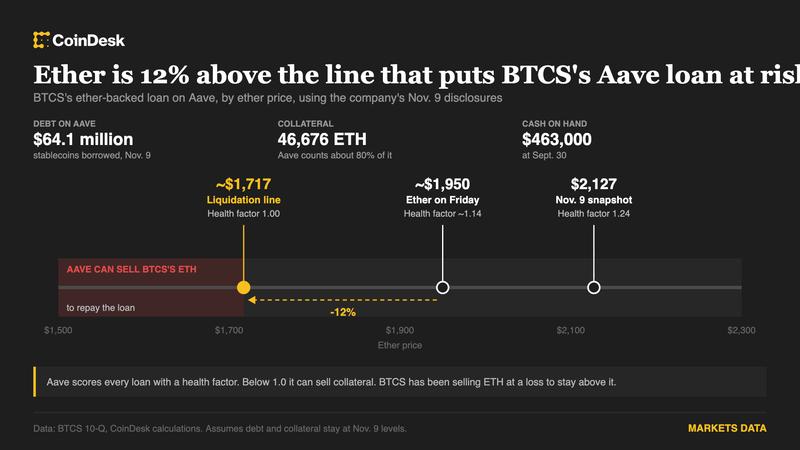
Ethereum treasury firm BTCS, a Nasdaq‑listed entity that uses ether as collateral for a sizable loan on the Aave protocol, recently sold a portion of its holdings at a loss. The move was driven by the need to keep its $64 million loan from breaching liquidation thresholds as ETH prices hovered near $1,700.
Why the Sale Was Necessary
BTCS holds roughly 46,676 ETH as collateral for the Aave loan. Aave’s liquidation mechanics trigger when the value of the collateral falls below a certain safety margin relative to the borrowed amount. With ETH trading close to $1,700, the collateral value was approaching the point where the loan could be flagged for liquidation. By liquidating a portion of its ether, BTCS aimed to reduce the loan‑to‑value ratio and preserve the health of the borrowing arrangement.
Impact on BTCS’s Balance Sheet
The sale of ETH at a price below recent market highs reduces BTCS’s immediate cash position but safeguards the company from a forced liquidation event that could be far more costly. The proceeds from the sale are expected to be used to partially repay the Aave loan, thereby lowering the outstanding balance and improving the loan‑to‑value metric. While the transaction reflects a short‑term loss, it stabilizes the firm’s longer‑term financial footing.
Broader Implications for Crypto‑Backed Lending
BTCS’s decision highlights a key risk factor for firms that rely heavily on volatile crypto assets as loan collateral. Market swings can quickly erode the cushion needed to avoid liquidation, prompting borrowers to manage exposure actively. The episode underscores the importance of maintaining adequate collateral buffers and having contingency plans—such as pre‑emptive asset sales—to navigate periods of price volatility.
Practical Takeaways
- Monitor collateral ratios closely: Borrowers should track the loan‑to‑value ratio in real time, especially when using assets with high price volatility.
- Maintain a safety buffer: Keeping collateral well above liquidation thresholds can reduce the need for reactive asset sales.
- Plan for liquidity events: Having a strategy to convert assets to cash without severe price impact can protect against forced liquidations.
Conclusion
BTCS’s loss‑making ether sale serves as a cautionary example for crypto‑backed borrowers. By acting proactively, the firm avoided a potentially damaging liquidation, reinforcing the need for disciplined risk management in the rapidly shifting landscape of decentralized finance.
Source
Read original sourceWhy we picked this
Institutional ETH liquidation risk, material market structure news